Bulk Enzyme for Baby Food Puree Viscosity Reduction
Baby food puree lines need a narrow operating window: smooth texture, predictable flow, efficient heat transfer, clean screening, stable filling, and a gentle process profile that protects fruit character. VelvetYield supplies bulk enzyme solutions built for fruit puree and baby food plants that need viscosity reduction without losing control of finished texture.
As an enzyme supplier for fruit puree processing, VelvetYield supports process managers working with apple, pear, apricot, peach, mango, banana blends, berry blends, and vegetable-fruit bases. Our focus is practical: help your puree move through the line with less resistance, fewer stoppages, and more consistent batch behavior.
Request a quote for a viscosity reduction enzyme matched to your fruit base, target texture, and process flow.
Designed for Pumpable, Fillable Baby Food Purees
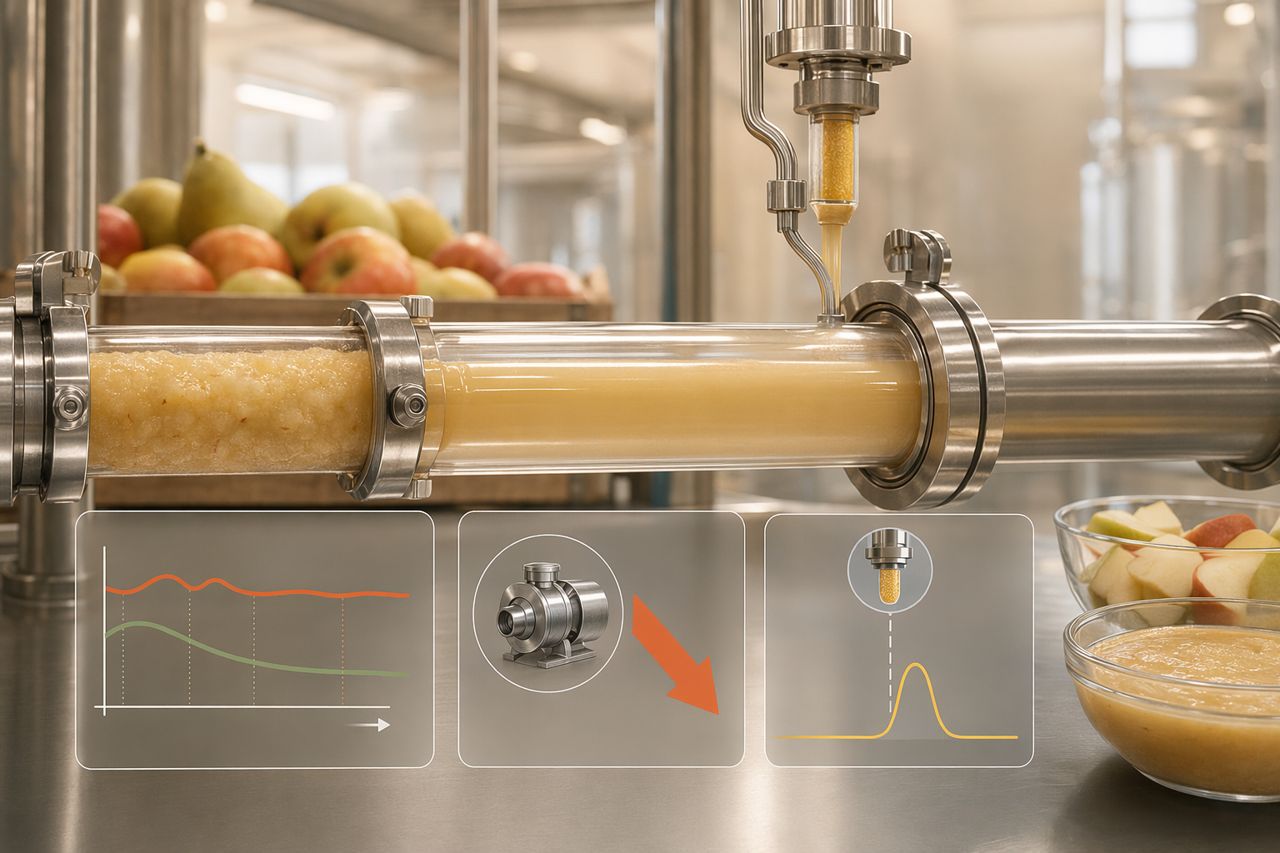
High-viscosity puree can slow a plant in quiet ways: pumps run harder, screens blind faster, deaeration becomes less stable, heat exchangers respond unevenly, and fillers drift from target performance. VelvetYield enzyme solutions help modify the pectin-rich structure that drives thick, resistant flow in many fruit purees.
The result is a more manageable puree stream that supports:
- Smoother transfer from mash tanks to finishing equipment
- Improved screen and finisher throughput
- More stable deaeration behavior
- More even heat-transfer performance
- Better flow control before filling
- Reduced batch-to-batch viscosity swings
- Cleaner process transitions across fruit varieties
The goal is not to make puree thin. The goal is to bring viscosity into a controlled production range while preserving a soft, spoonable, baby-food-appropriate texture.
Where Viscosity Reduction Creates Plant Value
1. Pumpability and Transfer Control
Fruit puree with high soluble fiber and pectin load can create pressure spikes and slow transfer. A controlled enzyme treatment can help the puree move more predictably through tanks, pumps, pipework, holding loops, and pre-fill systems.
For the plant team, this can mean fewer flow interruptions, lower mechanical stress, and a more stable feed to downstream equipment.
2. Screen and Finisher Throughput
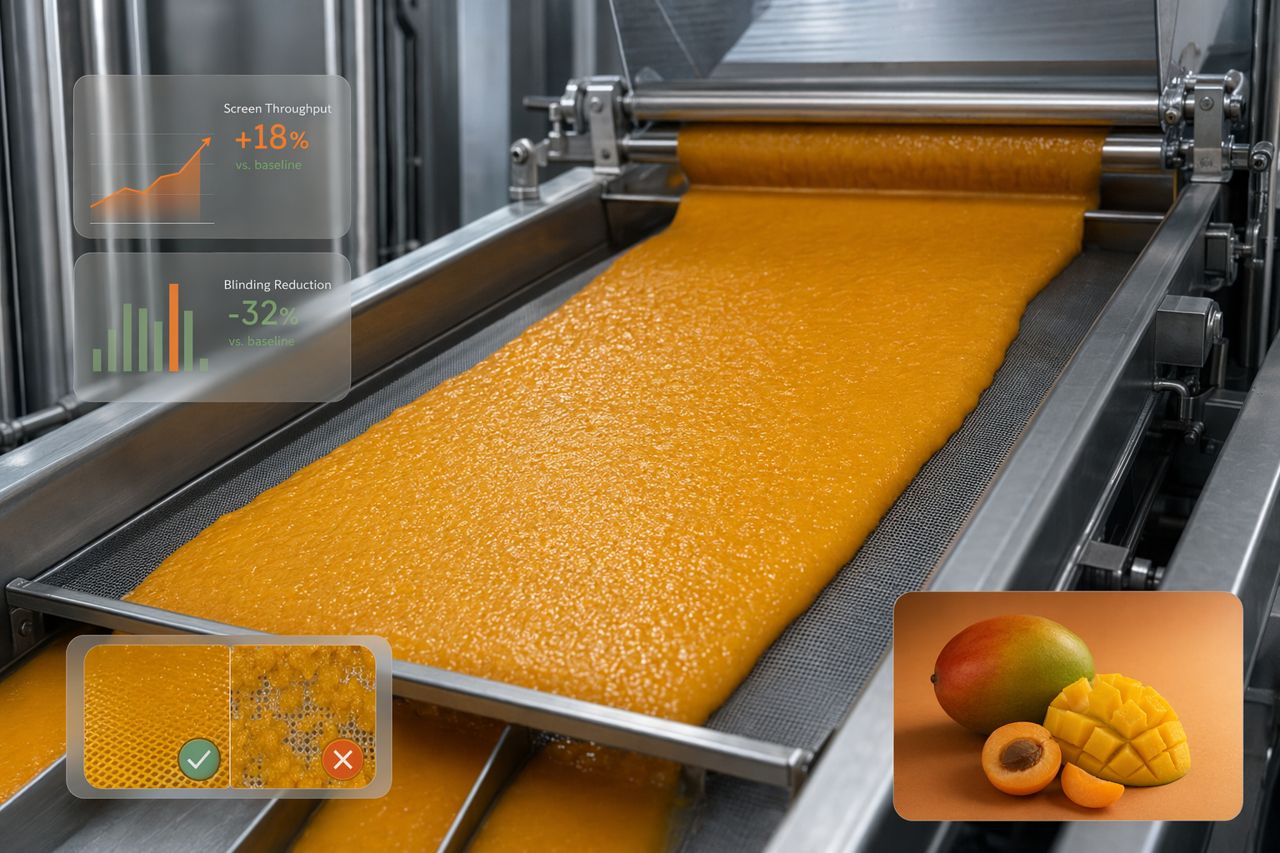
Screens and finishers often become bottlenecks when fruit cell wall material creates a thick, resistant matrix. VelvetYield enzyme solutions help loosen this structure, improving passage behavior while maintaining a clean, uniform puree body.
This supports faster processing, fewer manual interventions, and more repeatable separation of coarse material from the finished puree stream.
3. Deaeration Stability
Viscous puree can trap air, foam inconsistently, and respond unevenly in deaeration systems. By improving flow and reducing structural resistance, enzyme-assisted viscosity control can help the puree release entrained air more consistently.
This supports better fill appearance, smoother texture perception, and improved process control before thermal treatment and packaging.
4. Heat-Transfer Consistency
Puree that does not flow evenly can challenge heat exchangers. Uneven viscosity may affect residence behavior, surface loading, and temperature response across a batch. VelvetYield supports a more uniform puree stream so heating and cooling steps can operate with greater predictability.
For baby food plants, consistent heat transfer is not only a throughput issue. It is part of dependable, repeatable production.
5. Filler Stability
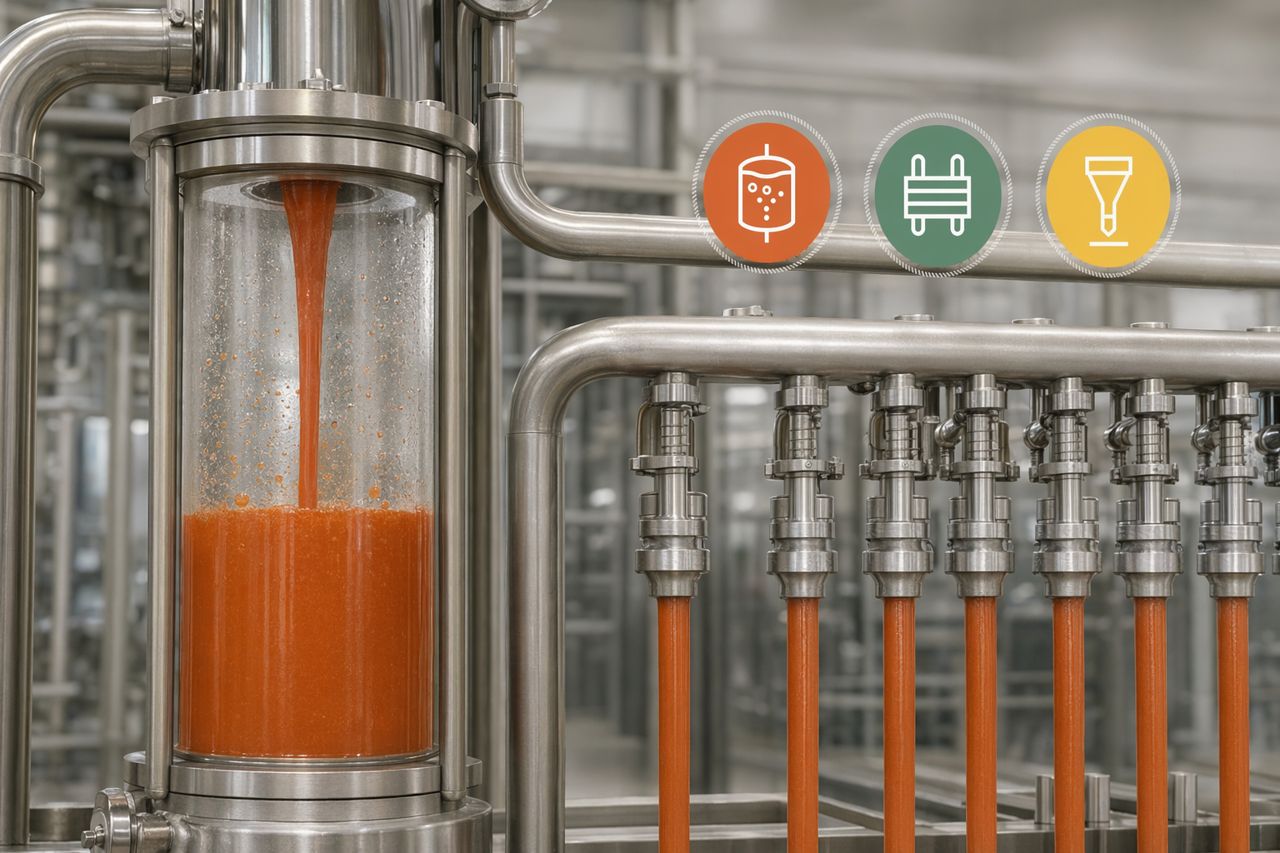
The final puree must fill cleanly, settle consistently, and hold a controlled texture in cups, jars, pouches, or other baby food formats. Enzyme selection and process timing matter. VelvetYield helps align viscosity reduction with filler requirements, so the product remains pumpable without becoming watery or unstable.
Built for Baby Food Process Requirements
Baby food puree production demands discipline. VelvetYield supports enzyme programs that are easy for plant teams to integrate, monitor, and repeat.
Our approach prioritizes:
- Controlled viscosity reduction, not over-processing
- Consistent response across fruit lots and seasonal variation
- Compatibility with puree, concentrate, and fruit-vegetable blends
- Practical use in existing mash, holding, or pre-finishing stages
- Process-friendly handling for bulk production environments
- Documentation support for ingredient and quality review
We understand that the best enzyme program is one the plant can run confidently during normal production.
Common Applications
VelvetYield viscosity reduction enzymes are used for fruit puree systems where pectin and cell wall structure affect flow.
Typical applications include:
- Apple puree for baby food bases
- Pear puree and pear-apple blends
- Apricot, peach, and nectarine puree
- Mango puree and tropical blends
- Berry-fruit puree blends
- Vegetable-fruit baby food bases
- High-fiber puree streams before screening or filling
- Puree streams requiring improved deaeration or heat exchange behavior
If your plant sees viscosity drift between fruit lots, frequent screen cleaning, slow tank emptying, or filler instability, an enzyme-supported viscosity control step may help.
Practical Integration Points
Every puree line is different. VelvetYield helps evaluate where the enzyme should be introduced for the most stable result.
Potential integration points include:
-
After milling or maceration
Supports early structure modification before finishing. -
In a controlled holding stage
Allows viscosity development to be managed before screening or heat treatment. -
Before finisher or screen systems
Helps improve passage and reduce load on downstream equipment. -
Before deaeration or thermal processing
Supports more stable flow and air release behavior. -
Before filling, when process design allows
Helps align final flow behavior with filler performance targets.
The correct point depends on fruit type, temperature profile, target texture, equipment layout, and finished product specification.
What VelvetYield Helps You Measure
A strong enzyme program should be evaluated with plant-floor indicators, not vague claims. VelvetYield can help your team review:
- Pump pressure trends
- Tank emptying time
- Screen loading and cleaning frequency
- Finisher throughput
- Deaeration stability
- Heat exchanger response
- Filler weight consistency
- Texture panel feedback
- Batch-to-batch viscosity profile
- Finished puree appearance and mouthfeel
These proof points make it easier to decide whether the enzyme program is delivering measurable value.
Why Choose VelvetYield
VelvetYield is focused on enzyme solutions for fruit puree processing. We speak in terms your production, quality, and maintenance teams can use: flow behavior, screen performance, batch reliability, clean texture, and stable filling.
Working with VelvetYield gives your plant:
- Bulk enzyme supply for commercial puree production
- Technical matching to fruit base and process conditions
- Support for viscosity reduction without texture collapse
- Guidance for trial planning and production-scale evaluation
- Clear communication for operations and QA teams
- A calm, practical supplier relationship built around repeatable batches
We help you turn a difficult puree stream into a more controlled process stream.
Request a Quote
Tell us about your fruit base, target texture, process stage, and production challenge. VelvetYield will recommend a bulk enzyme option for baby food puree viscosity reduction and support your evaluation plan.
Use the on-site request a quote form to share:
- Fruit or blend type
- Current viscosity or flow challenge
- Processing stage where the issue appears
- Equipment affected, such as pumps, screens, deaerators, heat exchangers, or fillers
- Desired improvement, such as higher throughput, smoother filling, or fewer batch adjustments
- Bulk supply requirements
Request a quote and our team will respond with a process-focused recommendation.