Why Apple and Pear Purees Become Stringy, Thick, or Difficult to Screen
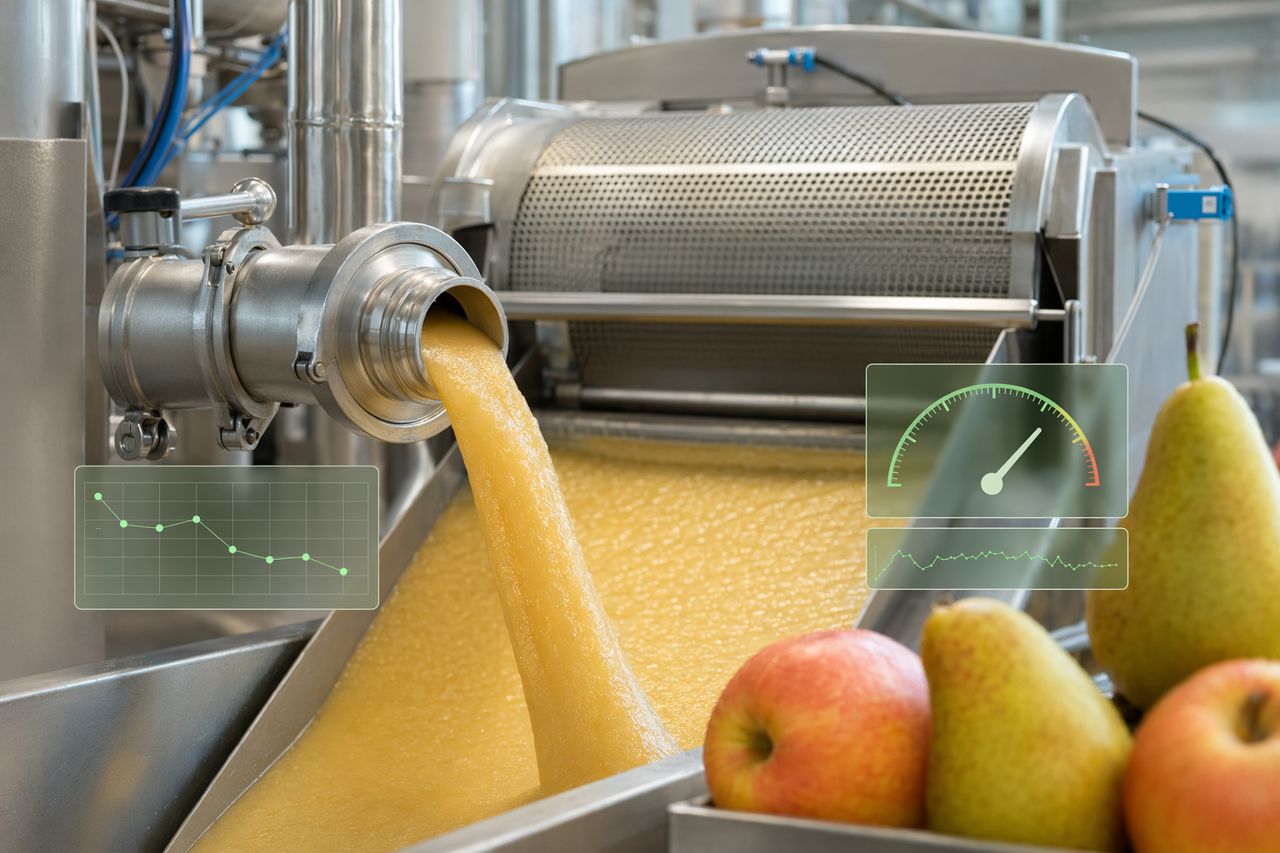
Apple and pear purees can look calm in the kettle and then become difficult on the line: long strands at the screen, slow transfer through pipework, unstable viscosity after heating, or poor separation before finishing. For a fruit puree and baby food plant, these issues often feel mechanical at first. Operators check the screen, pump, finisher, temperature, and dilution water.
But in pomaceous fruit, a major driver is usually pectin behavior.
VelvetYield supports plants that need predictable puree texture, higher usable yield, smoother screening, and more stable batch-to-batch flow. As an enzyme supplier for fruit puree processing, we focus on practical process outcomes: less stringiness, controlled viscosity reduction, improved pressing or finishing behavior, and consistent puree structure without over-processing the fruit.
The short version: pectin can build a hidden gel network
Apples and pears contain pectin in the middle lamella and cell wall structure. During crushing, heating, pulping, and shear, that pectin can hydrate and interact with suspended solids. The result is not always a firm gel. More often in puree production, it appears as:
- Thick, elastic puree that resists flow
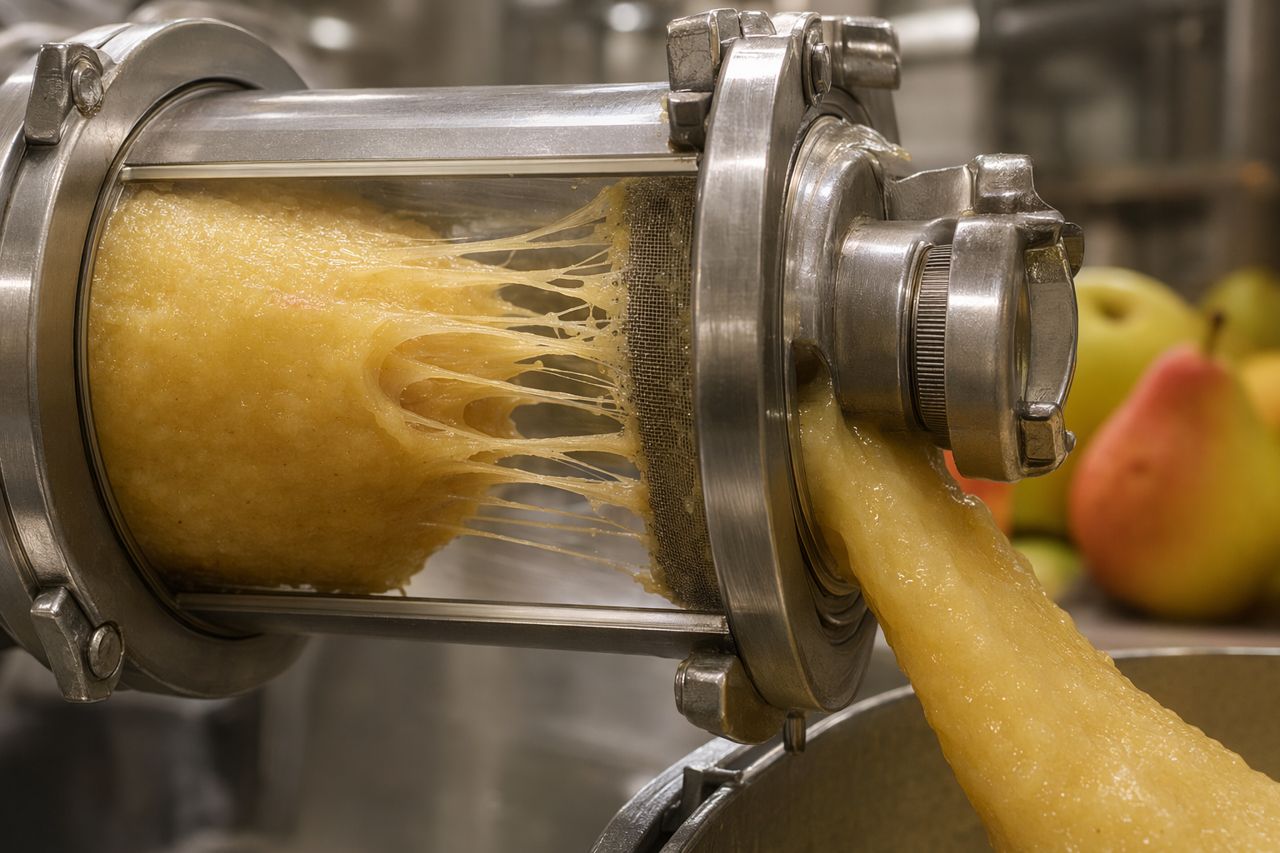
- Stringy texture at discharge or on screens
- Reduced finisher throughput
- Higher backpressure in transfer lines
- Slow deaeration or uneven heating
- Poor separation in pressing or pre-filtration steps
- Batch viscosity that changes after holding
This is why a puree may pass visual inspection but still behave poorly in equipment.
Why apple and pear behave differently from stone fruit or tropical fruit
Pomaceous fruits are naturally rich in pectic substances. The exact behavior depends on variety, maturity, storage condition, and thermal history.
Apple puree issues often show up as elastic thickness
Apple can form a cohesive body after milling and heating. In some batches, the puree looks glossy and smooth but creates high resistance through screens or finishers. The plant may respond by adding water, increasing temperature, or applying more shear. These fixes can help temporarily, but they may reduce finished solids, change mouthfeel, or push the line outside its ideal operating window.
Pear puree issues often show up as soft viscosity drift
Pear can appear easier to pulp, but viscosity may climb during holding or after heat exposure. Ripe pear can also create a delicate texture target: the plant wants a smooth, spoonable puree, not a watery or over-broken product. This makes controlled enzyme selection important.
Common plant symptoms and what they suggest
1. Stringing at the screen or finisher
Stringing usually indicates an elastic pectin network combined with fine pulp solids. It may appear as thin strands, webbing, or sticky material that bridges across screen openings. Operators may see more frequent screen cleaning, unstable throughput, or a wider pressure range during the run.
Process impact: lower line speed, increased downtime, and inconsistent finished texture.
2. High viscosity after milling
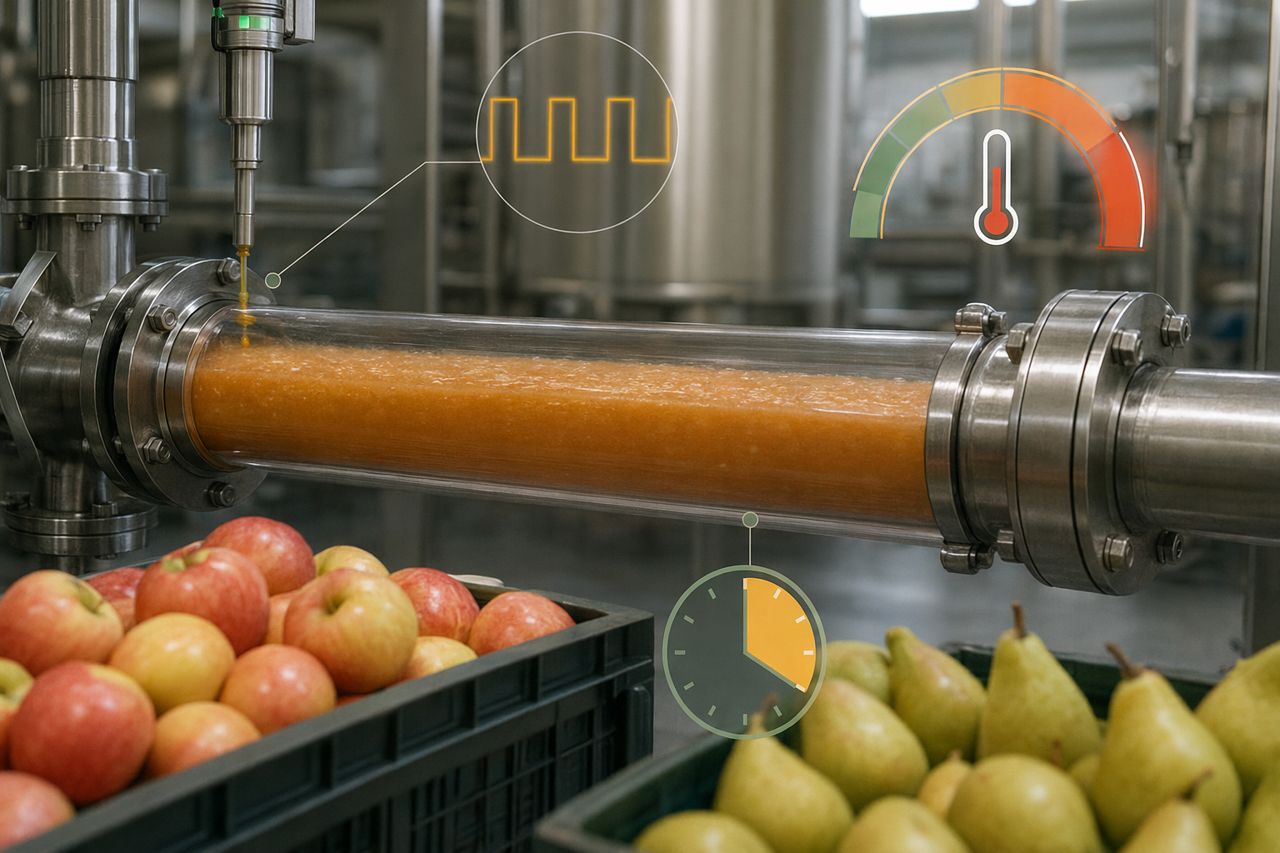
If viscosity rises quickly after crushing or pulping, pectin has likely hydrated before the process has stabilized. Temperature and residence time can make this worse. A puree that is too thick may not heat uniformly, which creates both quality and process control concerns.
Process impact: slower heat transfer, difficult pumping, and higher energy demand.
3. Poor pressing or low recoverable puree yield
In operations that press, decant, or separate before final blending, pectin can hold water and soluble fruit material inside the pulp matrix. That means more valuable fruit remains trapped in pomace or screen rejects.
Process impact: reduced usable yield and higher waste load.
4. Batch-to-batch inconsistency
Two apple lots from the same supplier can behave differently. Cold storage, ripeness, variety blend, and previous heat exposure all influence pectin structure. If the enzyme approach is too generic, one batch may process well while the next remains thick or over-thins.
Process impact: more operator intervention and less predictable release quality.
Where enzymes help in apple and pear puree processing
Enzymes are used to make the pectin network more manageable. The goal is not simply to make puree thin. The goal is to create the right flow behavior for your process while preserving the intended baby food or puree texture.
A well-matched enzyme program can help a plant:
- Reduce stringiness before screening or finishing
- Improve puree flow through pumps and heat exchangers
- Increase recoverable fruit solids from mash or pulp
- Improve filtration or separation behavior where applicable
- Reduce pressure spikes and screen blinding
- Stabilize viscosity targets across fruit lots
- Protect a smooth, gentle mouthfeel in finished puree
For baby food plants, this control matters because the final product must be consistent, safe to process, and easy to dose or fill without texture surprises.
Why enzyme choice matters
Not every pectin-focused enzyme produces the same plant result. Some systems are better suited to rapid viscosity reduction. Others are more controlled for texture-sensitive purees. Some may improve liquid release but produce a thinner mouthfeel than desired if the process window is not managed.
VelvetYield works with puree processors on the operating conditions that determine real performance:
- Fruit type and variety mix
- Mash or puree temperature window
- Holding time before heat inactivation
- Target viscosity range
- Screen size and finisher load
- Pressing, decanting, or filtration requirements
- Finished texture specification
- Clean-label and infant-food process expectations
The best enzyme recommendation is tied to the unit operation that is limiting the line, not just to the fruit name.
A practical troubleshooting map
If your puree is stringy
Look at when stringing appears. If it starts after milling but before heating, the enzyme contact step may need to happen earlier. If it appears after holding, the residence time and temperature profile may be allowing pectin to reorganize.
If your screens blind quickly
Check whether the issue is fibrous solids, pectin elasticity, or both. Enzyme treatment can reduce pectin-driven bridging, but screen load, particle size, and feed consistency still matter.
If viscosity drops too far
The enzyme system or contact time may be too aggressive for the target texture. For baby food puree, controlled viscosity reduction is usually better than maximum breakdown.
If yield is low
Review how much soluble fruit remains in press cake, finisher reject, or filter residue. Pectin can bind liquid inside the solids structure, and the right enzyme step can improve release.
What VelvetYield typically reviews before recommending a solution
To support a controlled plant trial, VelvetYield asks for a concise process picture:
- Fruit type, variety mix, and maturity range
- Current puree or mash flow path
- Temperature at milling, enzyme contact, and finishing
- Holding time before heat inactivation
- Main pain point: viscosity, stringing, yield, screening, or filtration
- Current screen or finisher setup
- Target finished texture and quality limits
- Any infant-food, puree, or aseptic processing requirements
This lets us recommend an enzyme approach that fits the plant floor rather than forcing the plant to adapt to a generic product.
What a successful plant trial should measure
A good trial does not need to be complicated. It should compare treated and untreated material under realistic process conditions.
Useful plant-floor proof points include:
- Pump pressure trend before and after treatment
- Screen or finisher throughput
- Frequency of screen cleaning
- Mash or puree viscosity trend using the plant’s normal method
- Press, decanter, or finisher yield
- Finished puree texture after heat treatment
- Filling behavior and batch consistency
- Reject volume or solids loss
The most useful result is not a perfect lab number. It is a repeatable production window your operators can run confidently.
Key takeaway
Apple and pear puree problems are often pectin problems expressed through equipment. Stringing, thick flow, poor screening, and inconsistent batches are signals that the pectin network is not under control.
With the right enzyme selection and process window, a fruit puree and baby food plant can improve flow behavior, protect texture, reduce waste, and make puree batches easier to run.
Request support for your apple or pear puree line
If your plant is dealing with stringy puree, slow screening, unstable viscosity, or yield loss, VelvetYield can help you review the process and plan a focused enzyme trial.
Request a quote and tell us your fruit type, current bottleneck, temperature window, and target texture. We will respond with a practical recommendation for your line.